

Trying to conceive can quietly become one of the most emotionally intense experiences in a relationship. The most effective way to support your partner is simple in principle: stay emotionally present, share the mental load, understand the biology and timing involved, and protect your relationship from turning into a task list.
This guide walks you through exactly how to show up in ways that will actually help.
Check out our Ovulation Cycle Calculator as well!
Why Support Matters More Than You Think
Fertility challenges don’t just affect the body. They affect identity, confidence, and the way a couple communicates. Research in reproductive psychology shows that stress and relationship strain can influence both emotional well being and, indirectly, fertility outcomes.
When one partner feels alone in the process, resentment can build.
I’ve seen couples who tracked every ovulation cycle perfectly but struggled because they stopped talking like partners. I’ve also seen couples with irregular cycles stay grounded because they treated the process as shared.
Understand What Your Partner Is Going Through
Before you try to “help,” you need context.
Trying to conceive often involves:
- Tracking ovulation cycles and timing intercourse
- Hormonal fluctuations that affect mood and energy
- Medical appointments, tests, and uncertainty
- Repeated cycles of hope and disappointment
If your partner is the one physically carrying the burden, they may also feel pressure tied to their body “working” or not.
Take time to learn the basics of fertility. Not as a passive observer, but as an active participant.
Key Fertility Basics You Should Know
| Concept | What It Means | Why It Matters |
|---|---|---|
| Ovulation Window | The 4–5 day period before ovulation plus ovulation day | Timing intercourse during this window increases chances |
| Cycle Length | Typically 21–35 days | Irregular cycles can make timing harder |
| Luteal Phase | Time after ovulation | Short phases can impact implantation |
| Sperm Health | Count, motility, morphology | Male factor infertility accounts for ~40–50% of cases |
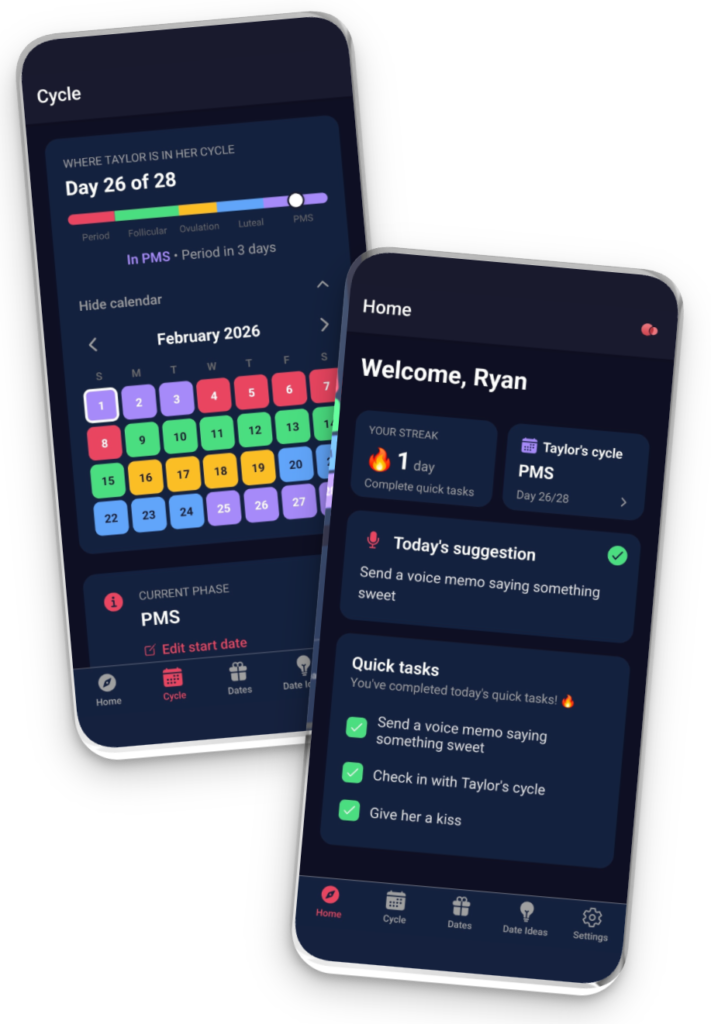
One of the things you have immediate control over in this situation is tracking her cycle. You can track your partner’s cycle using an app like DuoSync which was specifically designed for men.
This will help you know where she is in her cycle, when you may want to be intimate, and when to be supportive in her harder phases.
You can download DuoSync below.


Show Up Emotionally (Without Trying to Fix Everything)
Your instinct might be to solve the problem. That can backfire.
What your partner usually needs is to feel understood, not managed.
What actually helps:
- Listening without jumping to advice
- Acknowledging feelings without minimizing them
- Staying calm when emotions spike
Instead of saying:
“Don’t worry, it’ll happen”
Try:
“I can see how hard this is. I’m here with you”
Share the Mental Load
Trying to conceive can feel like a second job, especially for the partner tracking everything.
Support becomes real when you take ownership of parts of the process.
Practical ways to share the load:
- Learn how ovulation tracking works and check in proactively
- Set reminders for key dates (fertile window, appointments)
- Handle logistics like scheduling appointments or picking up supplements
Keep Intimacy From Becoming Mechanical
One of the biggest relationship traps during TTC is turning intimacy into a scheduled task.
When sex becomes tied only to fertility timing, it can lose emotional connection.
Try this approach:
- Keep some intimacy completely separate from ovulation tracking
- Focus on connection rather than outcome
- Talk openly if it starts to feel like pressure
A simple check-in like “How are you feeling about all this lately?” can reset things.
Manage Stress Together
Stress advice often sounds unrealistic. “Just relax” isn’t helpful when each cycle feels high stakes.
Instead of trying to eliminate stress, focus on managing it as a team.
What works in real life:
- Create routines that aren’t about fertility (walks, dinners, short trips)
- Set boundaries with people asking intrusive questions
- Agree on how much you want to research or track
Some couples limit TTC conversations to certain times of day.
Support Healthy Lifestyle Changes Without Policing
Fertility often comes with lifestyle recommendations. Diet, alcohol, sleep, supplements.
Support here can easily turn into pressure if you’re not careful.
The difference:
- Support: “Want me to cook something that fits your plan?”
- Pressure: “You shouldn’t be eating that if we want a baby”
If changes apply to both of you, do them together. That builds unity instead of imbalance.
Be Prepared for Medical Conversations
At some point, many couples explore medical support.
This can include:
- Fertility testing
- Hormone treatments
- Procedures like IUI or IVF
Even attending appointments together changes how supported your partner feels.
What helps most:
- Ask questions during appointments
- Take notes so your partner doesn’t carry it all
- Discuss options calmly afterward instead of reacting emotionally
Medical decisions can feel overwhelming.
Handle Setbacks With Care
Negative pregnancy tests can hit hard. And they happen often.
Your response in those moments shapes how safe your partner feels expressing disappointment.
Avoid jumping too quickly into optimism or problem-solving.
Instead:
- Acknowledge the disappointment
- Sit with it for a moment
- Let your partner lead how much they want to talk
Sometimes support is just sitting next to them without filling the silence.
Protect Your Relationship From Becoming “All About TTC”
It’s easy for trying to conceive to take over everything.
Conversations, plans, even identity as a couple.
You need to actively protect your relationship from shrinking into just this one goal.
Keep these anchors:
- Regular date nights that have nothing to do with fertility
- Conversations about future plans beyond having a child
- Humor and lightness when possible
You’re building a family. The relationship is the foundation.
When to Suggest a Break
Sometimes the process becomes emotionally draining.
Taking a short break from active trying can help reset both partners.
But this has to be handled carefully. Don’t frame it as giving up. Frame it as protecting your wellbeing.
Timing matters. So does tone.
Expert Insight: What Fertility Counselors Emphasize
Fertility counselors consistently point to three factors that improve outcomes for couples emotionally:
- Open communication without avoidance
- Shared responsibility in the process
- Emotional validation during setbacks
Couples who maintain these tend to report less stress, even when conception takes longer.
Common Mistakes That Undermine Support
You don’t need to be perfect. But avoiding these makes a big difference:
- Treating it as your partner’s responsibility
- Minimizing emotions with logic or timelines
- Over-researching and overwhelming your partner with information
- Comparing your journey to others
Every couple’s timeline is different. Comparison adds pressure without adding value.
A Simple Weekly Check-In Framework
If you want something practical you can actually use, try this once a week:
Ask each other:
- “How are you feeling about everything right now?”
- “Is there anything I could do differently to support you?”
- “Do we want to adjust how we’re approaching this?”
Keep it short. Honest. No defensiveness.
This alone can prevent months of silent frustration.
FAQ: Supporting Your Partner While Trying to Conceive
How do I support my partner emotionally during TTC?
Be present and listen without trying to fix everything. Validate their feelings and avoid dismissing concerns with quick reassurance.
What should I say after a negative pregnancy test?
Keep it simple and empathetic. Acknowledge the disappointment and let your partner guide the conversation.
How involved should I be in the fertility process?
As involved as possible. Learn the basics, attend appointments, and share the mental load so it doesn’t fall on one person.
Can stress affect fertility?
High stress alone doesn’t directly cause infertility, but it can impact hormones, behavior, and relationship dynamics, which can indirectly affect outcomes.
How do we keep intimacy natural while trying to conceive?
Separate some moments of intimacy from fertility timing and focus on connection, not just conception.
When should we consider medical help?
Generally after 12 months of trying (or 6 months if over age 35), though earlier consultation can be helpful if there are known concerns.
Trying to conceive can either pull you apart quietly or bring you closer in a very intentional way. The difference usually comes down to how you show up for each other when things aren’t easy.
You don’t need perfect words or perfect timing. You just need to stay in it together.