
Period cramps generally range from a dull, heavy ache in your lower abdomen to sharp, stabbing sensations that can radiate into your lower back and thighs. For some, it is a constant pressure similar to a pulled muscle, while for others, it comes in waves of intense squeezing as the uterus contracts.
It is not just a stomach ache. It is lower down, usually right behind the pubic bone, and it feels heavy. Sometimes it is a slow, rhythmic throbbing that makes you want to curl into a ball. Other times, it is a sudden, sharp pinch that literally takes your breath away.
The Different Levels of Pain
Not every cramp feels the same. You can categorize them into two main types.
The first is the dull ache. This is the one that lingers for hours or even days. It makes your whole midsection feel inflamed and tender to the touch. It is a wearying kind of pain that saps your energy. You feel bloated, and every movement feels slightly more difficult because your core muscles are constantly tensed up.
The second is the acute contraction. These are the sharp ones. These happen because the uterus is a muscle that is physically tightening to shed its lining. When it tightens hard, it can cut off blood flow to the tissue for a moment, which is where that intense “stabbing” feeling comes from. It can feel like a localized charley horse but inside your pelvis.
Where Else Do You Feel It?
A lot of people are surprised to learn that period pain does not stay in the stomach area. It feels like a deep, hot ache in the spine that no amount of stretching can fix. For some women their thighs also get a weird heaviness, almost like they have been walking for ten miles straight.
You might also deal with what people call period flu or digestive issues. Because the hormones that make your uterus contract can also affect your bowels, you might get intestinal cramping that feels very different from the uterine ones. It is a more “gurgly” and urgent kind of pain.
Statistics and Reality
Statistics show that about 80 percent of women experience period pain at some point in their lives. However, about 5 to 10 percent of women have pain so severe that it disrupts their daily activities.
What Actually Helps?
Here is what usually works for the average person:
- Heat: An electric heating pad or a hot water bottle is a lifesaver. It helps those tight muscles relax.
- Anti inflammatories: Taking something like Ibuprofen before the pain gets really bad is way more effective than waiting until you are already miserable.
- Movement: It sounds counterintuitive when you are in pain, but a light walk can sometimes help blood flow and ease the tension.
- Hydration: Drinking a lot of water helps with the bloating, which in turn makes the pressure feel a bit less intense.
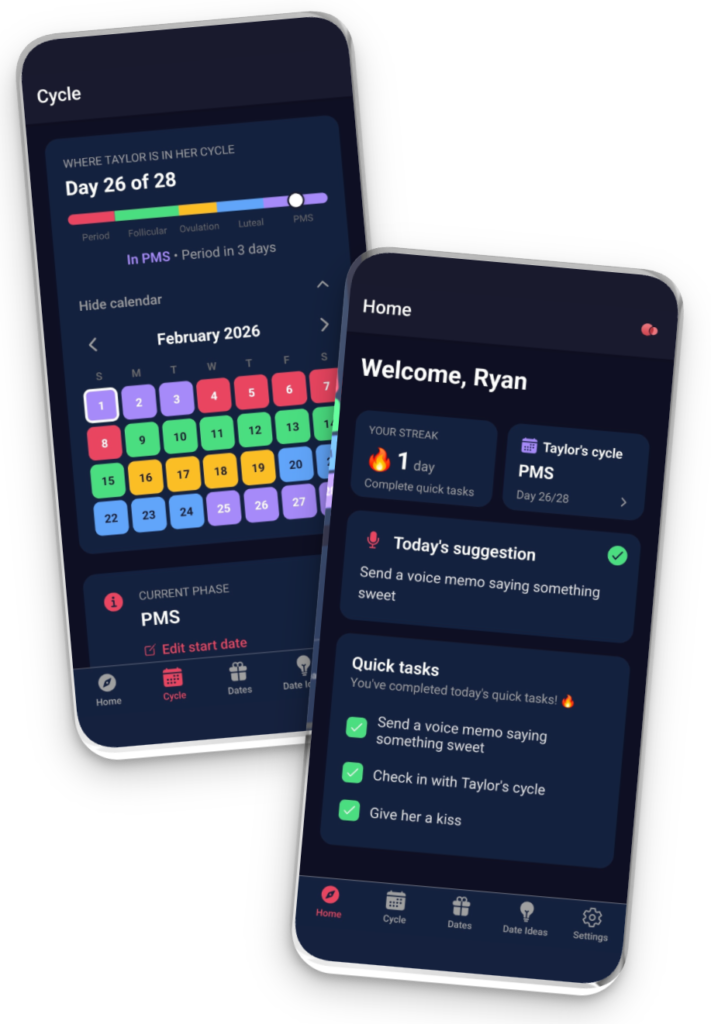
If you are a guy trying to track this to be a better partner, using an app like DuoSync can be really helpful. It is a period tracker designed for men so you can actually see when her cycle is approaching and have the heating pad and snacks ready before she even has to ask. It takes the guesswork out of being supportive.


Download the DuoSync app to grow closer to your partner.
FAQ
Do period cramps feel like being kicked?
Not exactly. A kick is a sudden impact from the outside. Cramps are an internal pressure and squeezing that lasts much longer than a single hit.
Can period cramps cause leg pain?
Yes, the nerves in your pelvic region are connected to your lower back and legs. It is very common for the pain to radiate down your thighs and make them feel heavy or achy.
Is it normal to feel dizzy with period cramps?
Some people do feel lightheaded or nauseous if the pain is intense enough. However, if you are regularly fainting, you should definitely talk to a doctor.
How long do period cramps usually last?
Most people deal with the worst of it in the day or two leading up to their period and the first twenty four to forty eight hours of bleeding. After that, the intensity usually drops off significantly.