
DuoSync is the better choice for men. Clue is a powerful, science-backed period tracker, but it’s built for women tracking their own health. It’s not designed for male users, and that creates friction in real-world use.
If you’re a guy trying to understand your partner’s cycle, this distinction matters more than features.
What These Apps Are Actually Designed For
This is where most comparisons go wrong.
- DuoSync → built specifically for men
- Clue → built for women tracking their own bodies
That single difference changes everything about usability.
Clue Period & Cycle Tracker is one of the most established apps in the category, with millions of users and a strong scientific foundation.
But it’s not trying to solve the same problem as DuoSync.
DuoSync vs. Clue: Core Comparison
| Feature | DuoSync | Clue |
|---|---|---|
| Target User | Men | Women / people with cycles |
| Setup | Simple, male-focused | Requires personal health data |
| Insights | Behavior + relationship guidance | Medical + biological insights |
| Ease of Use for Men | High | Low |
| Data Entry | Minimal | Extensive tracking required |
| Pricing | Freemium | Free + paid (Clue Plus) |
| Best Use Case | Supporting a partner | Tracking your own cycle |
What Clue Does Extremely Well
Clue is one of the most advanced period tracking apps available.
1. Deep, Science-Based Tracking
Clue allows users to track:
- 100+ biological and behavioral factors
- Mood, pain, sleep, energy, and more
- Fertility, ovulation, and pregnancy stages
It’s built like a health platform, not just a tracker.
There’s real credibility behind it:
- Research partnerships with institutions like Berkeley and MIT
- Clinically informed predictions and analysis
If you’re the one experiencing the cycle, this level of detail is valuable.
2. Accurate Predictions and Long-Term Data
Clue’s algorithm improves over time by analyzing:
- Historical cycles
- Symptom patterns
- Behavioral trends
It can predict:
- Period timing
- PMS windows
- Fertility windows
For personal health tracking, it’s one of the best tools available.
3. Educational Content and Health Insights
Clue includes:
- Hundreds of expert-written articles
- Medical explanations of cycle phases
- Guidance on conditions like PCOS or irregular periods
This is where it stands out from almost every other app.
Where Clue Breaks Down for Men
Here’s the problem.
Everything that makes Clue powerful also makes it impractical for male users.
1. You Need Detailed Personal Data
To use Clue properly, you need:
- Daily symptom logging
- Accurate cycle data
- Ongoing input from the person experiencing the cycle
That’s not something most men have access to.
2. It’s Not Designed for Relationship Context
Clue tells you:
- What’s happening biologically
It does not tell you:
- How to respond
- How to adjust behavior
- What this means in a relationship
That gap is exactly what DuoSync fills.
3. Partner Features Are Limited
Clue does offer sharing via “Clue Connect,” but it’s secondary.
Even then:
- It depends on your partner actively using the app
- It’s not designed as a male-first experience
So in practice, most men won’t get consistent value.
Why DuoSync Works Better for Men
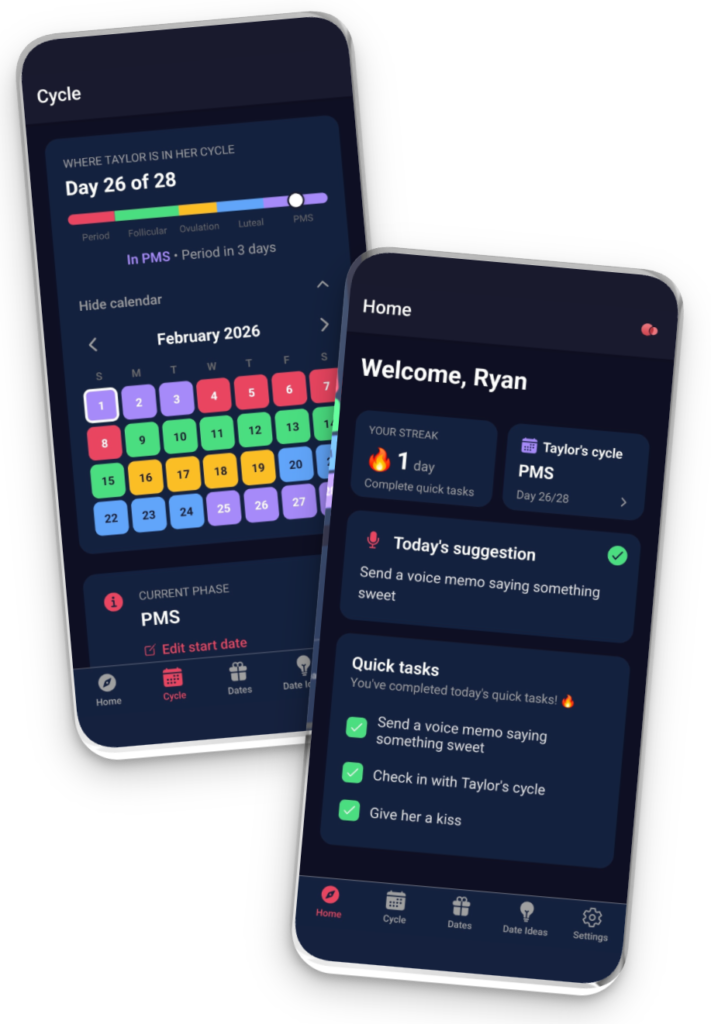
DuoSync removes the friction.
1. Built for Your Perspective
You don’t need:
- Medical knowledge
- Detailed symptom tracking
- Partner involvement
You open the app and get:
- Clear cycle phases
- Behavioral insights
- Practical suggestions
That’s what most guys are actually looking for.
2. Actionable Guidance (Not Just Data)
Clue gives you information.
DuoSync gives you direction.
Examples:
- When to plan something social
- When to be more patient
- When to expect emotional shifts
That’s the difference between knowing and using.
3. Much Lower Effort
Clue requires:
- Consistent logging
- Active participation
DuoSync works with:
- Minimal input
- Passive usage
That makes it sustainable long-term.


Download the DuoSync app to grow closer to your partner.
Real-World Comparison
Scenario: You Want to Avoid Conflict
Using Clue:
- You’d need access to detailed cycle data
- You interpret phase information yourself
That’s not realistic for most men.
Using DuoSync:
- You get a clear heads-up
- You understand what’s likely happening
- You adjust behavior immediately
Scenario: Long-Term Use
Clue:
- Excellent if your partner is actively tracking
- Weak if you’re using it alone
DuoSync:
- Designed to work independently
- Consistent value without dependency
Privacy Considerations
Clue is actually strong here.
- Operates under strict EU privacy laws (GDPR)
- Offers data control and deletion options
That’s a plus.
But it still requires:
- Account creation
- Data input
- Ongoing tracking
DuoSync’s lighter approach reduces exposure simply by requiring less data overall.
Which One Should You Choose?
Choose DuoSync if:
- You’re a man trying to understand your partner
- You want simple, actionable insights
- You don’t want to rely on your partner using an app
Choose Clue if:
- You (or your partner) want deep health tracking
- You care about medical-level insights
- You’re okay with consistent data entry
My Take After Comparing Both
Clue is a better health tracker.
DuoSync is a better tool for men.
That’s the key distinction.
Most guys don’t need:
- 100+ tracked variables
- Medical dashboards
- Fertility analytics
They need:
- Awareness
- Timing
- Guidance
That’s why DuoSync wins in this specific comparison.
FAQ
Can men use the Clue app?
Technically yes, but it’s not designed for men. You’ll need detailed cycle data to make it useful.
Is Clue more accurate than DuoSync?
For biological tracking, yes. Clue uses detailed data and scientific models.
But accuracy doesn’t equal usability for men.
Does Clue require a subscription?
There’s a free version, but advanced insights are part of Clue Plus.
Is DuoSync easier to use?
Yes. It’s designed for quick understanding without heavy input.
Can Clue replace DuoSync for men?
Not effectively. It solves a different problem.