
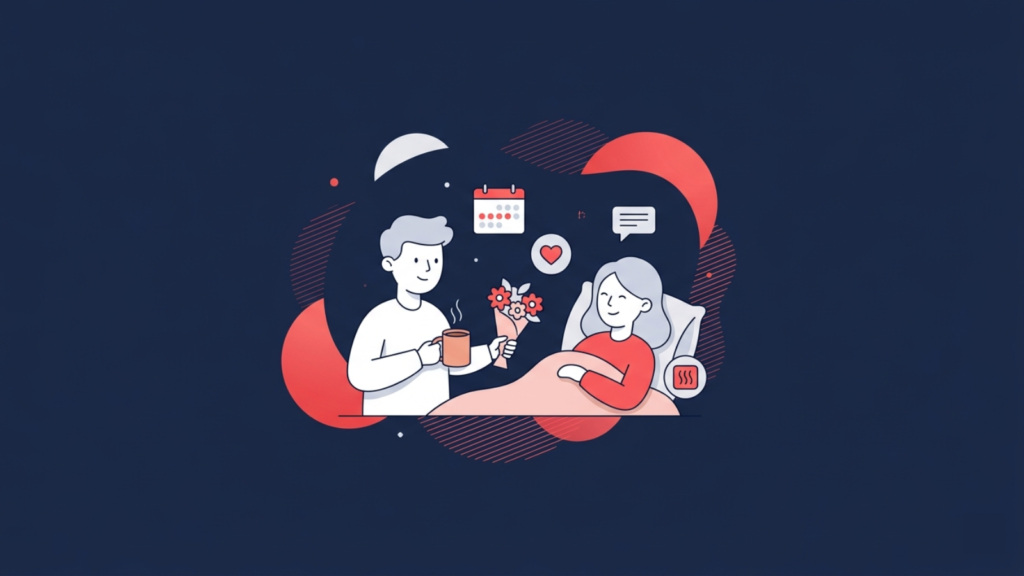
Supporting your partner during their period is mostly about three things: paying attention, reducing physical discomfort where you can, and adjusting expectations for a few days. Small actions matter more than big gestures. That can mean grabbing pain relief, handling dinner when cramps hit, or simply recognizing that their body is dealing with hormonal changes and fatigue.
The goal is not to “fix” the experience. The goal is to make those few days easier.
This guide explains exactly how to do that in practical terms, including what’s happening in the body during menstruation, what symptoms feel like, and specific actions that genuinely help.
Understanding What Your Partner Is Experiencing
A period is part of the menstrual cycle, when the uterus sheds its lining if pregnancy has not occurred. This process is driven by hormonal changes involving estrogen and progesterone.
Many people experience physical and emotional symptoms. Some are mild. Others can be intense.
Common symptoms include:
| Symptom | What It Feels Like | Why It Happens |
|---|---|---|
| Cramps | Lower abdominal pain that can radiate to the back or thighs | Uterine contractions triggered by prostaglandins |
| Fatigue | Low energy, sleepiness | Hormonal shifts and blood loss |
| Headaches | Dull or migraine-like pain | Hormone fluctuation |
| Mood changes | Irritability, sadness, sensitivity | Hormone changes affecting neurotransmitters |
| Bloating | Tight or swollen abdomen | Water retention linked to hormonal shifts |
Some people also deal with Premenstrual Syndrome (PMS) before bleeding begins. Symptoms may include mood swings, breast tenderness, and food cravings.
More severe symptoms may indicate Premenstrual Dysphoric Disorder (PMDD) or conditions like Endometriosis or Polycystic Ovary Syndrome, which can cause significant pain or irregular cycles.
Understanding this context changes how support should look.
What Support Actually Looks Like
Helping during a period usually comes down to reducing friction in daily life.
Most partners appreciate support in three areas:
- Physical comfort
- Practical help
- Emotional awareness
The exact mix varies from person to person. Communication matters more than assumptions.
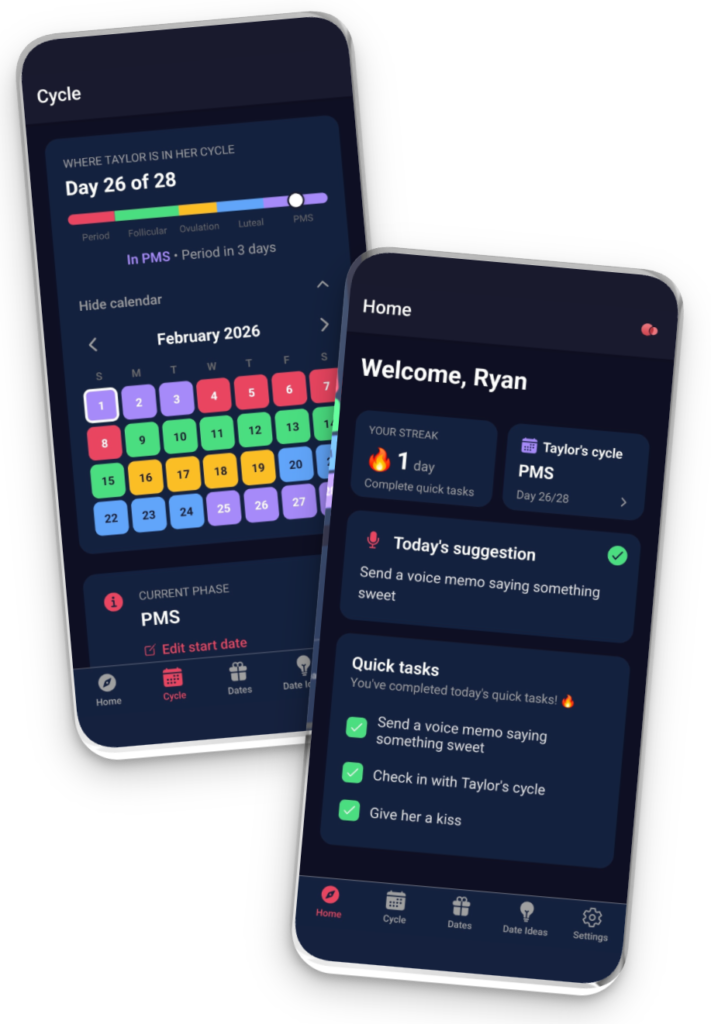
Using an app like DuoSync will help you stay in sync with your partner’s cycle and show up how she needs you the most.


Download the DuoSync app to grow closer to your partner.
Practical Things You Can Do That Actually Help
Some actions make an immediate difference.
• Offer a heating pad or hot water bottle for cramps
• Pick up menstrual products if needed
• Handle cooking or ordering food
• Bring snacks or drinks without being asked
• Run errands or take over small chores
These gestures lower the physical and mental load.
Many people with cramps use Ibuprofen or Naproxen, which help reduce prostaglandins that cause uterine contractions.
If your partner asks for medication, bringing it quickly can be surprisingly helpful.
A simple scenario:
Your partner says their cramps are bad and they feel exhausted. Instead of asking multiple questions, you might:
- bring pain relief and water
- put a heating pad on the couch
- order dinner or cook something simple
Those small steps can change the entire evening.
The Foods and Drinks That Help With Period Symptoms
Certain foods can help reduce discomfort or improve energy.
| Food or Drink | Why It Helps |
|---|---|
| Dark chocolate | Magnesium may help relax muscles |
| Bananas | Potassium can reduce bloating |
| Ginger tea | Often used to reduce nausea and cramps |
| Iron-rich foods (spinach, lentils) | Replenishes iron lost during bleeding |
| Warm soups | Easy to digest and comforting |
Avoid making a big deal about cravings. They are common during hormonal shifts.
A quick snack run can feel surprisingly thoughtful.
Emotional Support Without Overdoing It
Hormones can affect mood, but that doesn’t mean someone becomes irrational or difficult.
The most helpful approach is simple emotional awareness.
Examples:
- listening instead of offering solutions
- asking how they feel rather than guessing
- avoiding dismissive comments about PMS
What tends to work well:
• “Do you want to talk about it or just relax?”
• “Is there anything I can grab for you?”
• “Want company or quiet time?”
Short questions show attention without pressure.
Things That Often Make Periods Worse
Support also means avoiding behaviors that increase stress.
A few common mistakes:
| Behavior | Why It Causes Problems |
|---|---|
| Minimizing symptoms | Makes the person feel dismissed |
| Jokes about PMS | Often feels disrespectful |
| Expecting normal energy levels | Fatigue is common |
| Treating periods as embarrassing | Reinforces stigma |
Periods are a normal biological process. Treating them casually and respectfully helps normalize the experience.
Physical Comfort That Helps With Cramps
Cramps happen because the uterus contracts to shed its lining. Certain approaches help relax those muscles.
Heat therapy is one of the most effective. A heating pad or hot bath can reduce pain significantly.
Gentle movement can also help. Light walking or stretching sometimes eases discomfort by increasing blood flow.
Massage can also help. Lower back pressure often relieves pelvic pain connected to menstrual cramps.
Intimacy and Periods
Every couple handles intimacy during menstruation differently.
Some people prefer to avoid it entirely. Others are comfortable with it.
The most important thing is communication and consent.
Hormonal changes can affect libido. Some people experience higher desire, while others feel too uncomfortable.
Asking rather than assuming avoids awkward situations.
Supporting Your Partner at Different Stages of the Cycle
Support can look different depending on timing.
| Phase | What They May Feel | Helpful Support |
|---|---|---|
| PMS (days before period) | Mood changes, cravings | Patience and emotional awareness |
| Early period | Strong cramps, fatigue | Heat, rest, reduced workload |
| Mid-period | Lower pain but still tired | Light help with daily tasks |
| End of period | Energy returning | Resume normal routines |
Recognizing patterns helps partners anticipate needs.
When Period Pain Is Not Normal
If your partner regularly experiences:
- vomiting from cramps
- pain that stops normal activity
- extremely heavy bleeding
- periods longer than 7–8 days
they may need medical evaluation.
Conditions like Endometriosis can cause intense pelvic pain that many people mistakenly assume is normal.
Encouraging medical support when symptoms are severe can be part of caring support.
Asking What They Need
Every person experiences menstruation differently. The most effective approach is simply asking:
“Anything that would make today easier?”
That single question avoids guessing. Some people want extra attention. Others prefer space. Support works best when it matches the individual.
FAQ: Supporting Your Partner During Their Period
Should I treat my partner differently during their period?
Not dramatically. Small adjustments help. Being patient with fatigue, offering help with chores, and checking in emotionally are usually enough.
Is it normal for periods to cause strong pain?
Mild to moderate cramps are common. Severe pain that disrupts daily life can signal conditions like Endometriosis and should be evaluated by a healthcare professional.
What’s the best thing I can bring my partner during their period?
Heating pads, snacks, tea, and pain relief such as Ibuprofen are commonly helpful. Comfort food and warm drinks are also appreciated.
How do I ask about period symptoms without being awkward?
Keep it simple and normal. Questions like “How are you feeling today?” or “Anything I can grab for you?” work well.
Is exercise helpful during a period?
Light activity such as walking or stretching can reduce cramps for some people. Intense exercise may feel uncomfortable during heavy symptom days.
Bottom line: supporting your partner during their period is about attention, empathy, and small practical actions. When someone is dealing with cramps, fatigue, and hormonal shifts, even simple help can make those few days far more manageable.