
PMS is a very real medical condition rooted in significant hormonal shifts that affect the majority of people who menstruate. While the severity varies, it is not an exaggeration for those experiencing physical pain or genuine emotional distress during their luteal phase.
I have spent a lot of time looking into this because my partner used to have a really rough time every month. It is easy for guys to assume it is just a mood swing or an excuse to be grumpy, but that is honestly such a lazy way to look at it.
About 75 percent of women report having some kind of PMS symptoms during their lives. For most, it is manageable, but for about 3 to 8 percent, it actually develops into PMDD, which is a much more severe version that can be totally debilitating.
When people say it is exaggerated, they usually focus on the emotional side, like crying over a commercial or being irritable. What they miss is the physical reality. Your hormones like estrogen and progesterone basically tank right before your period starts. This drop affects your brain chemistry, specifically serotonin, which is the chemical that helps stabilize your mood and sleep.
When your serotonin levels dip, you are naturally going to feel more anxious or tired. It is a biological chain reaction, not a choice.
I think the reason it gets a bad rap as being “exotic” or “dramatic” is that some people use it as a punchline. In reality, it involves things like intense bloating, breast tenderness, and actual migraines.
I have seen my girlfriend deal with cramps that look like they hurt worse than any flu I have ever had. It is hard to exaggerate something that literally keeps you curled up in a ball on the couch for two days straight.
If you are a guy trying to figure this out, the best thing you can do is stop looking for reasons to dismiss it. Everyone is different. Some women barely feel a thing, while others feel like their body is staging a coup. If your partner is struggling, just believe them.
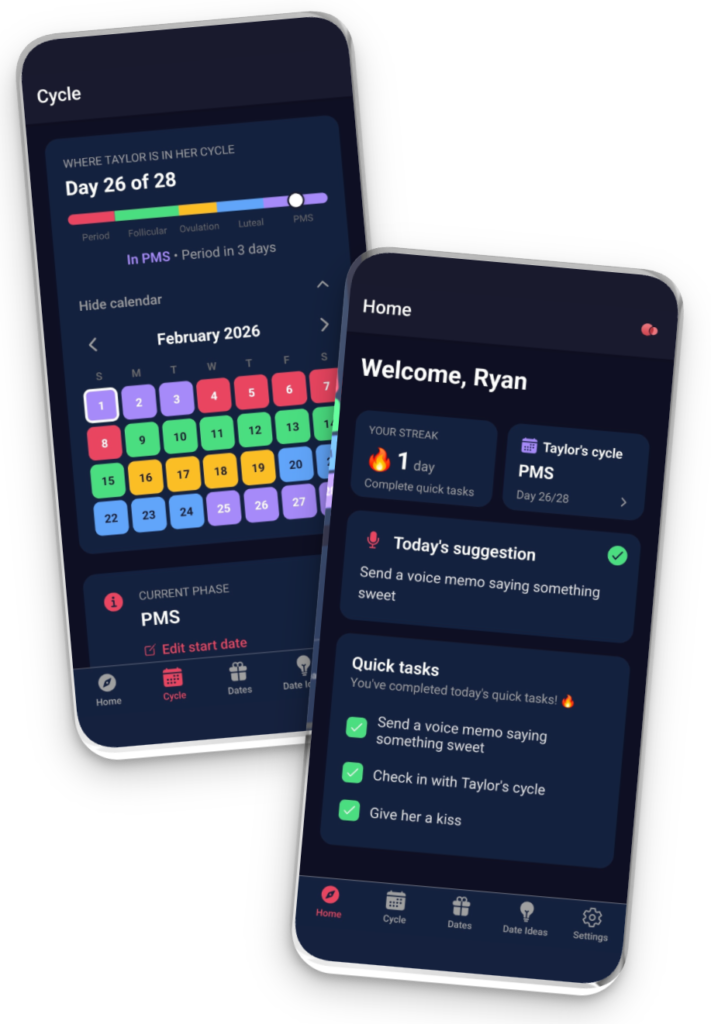
I started using an app called DuoSync recently. It is a period tracker designed for men so I can see exactly where my girlfriend is in her cycle. It helps me know when the luteal phase is hitting so I can be a bit more patient. It definitely beats being caught off guard and saying something stupid that makes her feel worse.


Download the DuoSync app to grow closer to your partner.
Instead of wondering if it is exaggerated, just look at the numbers and the science. If 90 percent of people with periods say they feel at least one symptom, it is a universal human experience for that group. It is a physical process of the body preparing for and then shedding a lining. That takes a lot of energy and causes a lot of inflammation.
You don’t need to be a doctor to see that these changes are legitimate. Once I stopped thinking of it as a “mood” and started seeing it as a recurring health event, our relationship got a lot easier.
PMS and Health FAQ
What are common PMS symptoms for women?
The most common signs include bloating, mood swings, irritability, food cravings, and breast tenderness. Some people also experience breakouts or trouble sleeping.
Is PMDD different from PMS?
Yes, PMDD stands for Premenstrual Dysphoric Disorder. It is a much more severe form of PMS that causes extreme emotional distress and physical symptoms that often require medical intervention.
How can I help my partner during their period?
Be proactive with comfort items like heating pads and snacks. Using a tracker like DuoSync can help you stay ahead of the cycle so you aren’t asking “Is it that time of the month?” which is usually the wrong move.
When do PMS symptoms usually start?
They typically kick in during the luteal phase, which is about five to eleven days before the period actually starts. They usually go away once the bleeding begins.