
It’s likely that she has PMDD (Premenstrual Dysphoric Disorder) or severe PMS, which causes a massive drop in progesterone and serotonin right before her period starts.
This hormonal shift can trigger intense “relationship paranoia” or a fight or flight response where she feels like the entire relationship is failing, even if things were fine a week ago.
I have seen this happen in my own life and with plenty of friends. It is not that she is being “crazy” or “dramatic.” Her brain is actually processing emotions differently because of the hormone withdrawal. When progesterone levels crash, it can make the brain’s amygdala more reactive. This means minor annoyances feel like deal breakers and small disagreements feel like absolute catastrophes.
If you look at the stats, about 5 to 8 percent of women have PMDD, but way more experience enough PMS that it affects their logic. In these moments, she isn’t just “mad” at you. She might genuinely feel like she does not love you anymore or that you are a bad match. The scary part for the guy is that she feels these things with 100 percent conviction in the moment. Then, usually by day two of her period, the “fog” lifts, her hormone levels begin to stabilize, and she feels terrible about the things she said.
The best thing you can do is start tracking her cycle. I started doing this because I was tired of being blindsided by a breakup threat every twenty eight days. I actually use an app called DuoSync for this. It is a period tracker designed for men that lets you see where she is in her cycle.


Download the DuoSync app to grow closer to your partner.
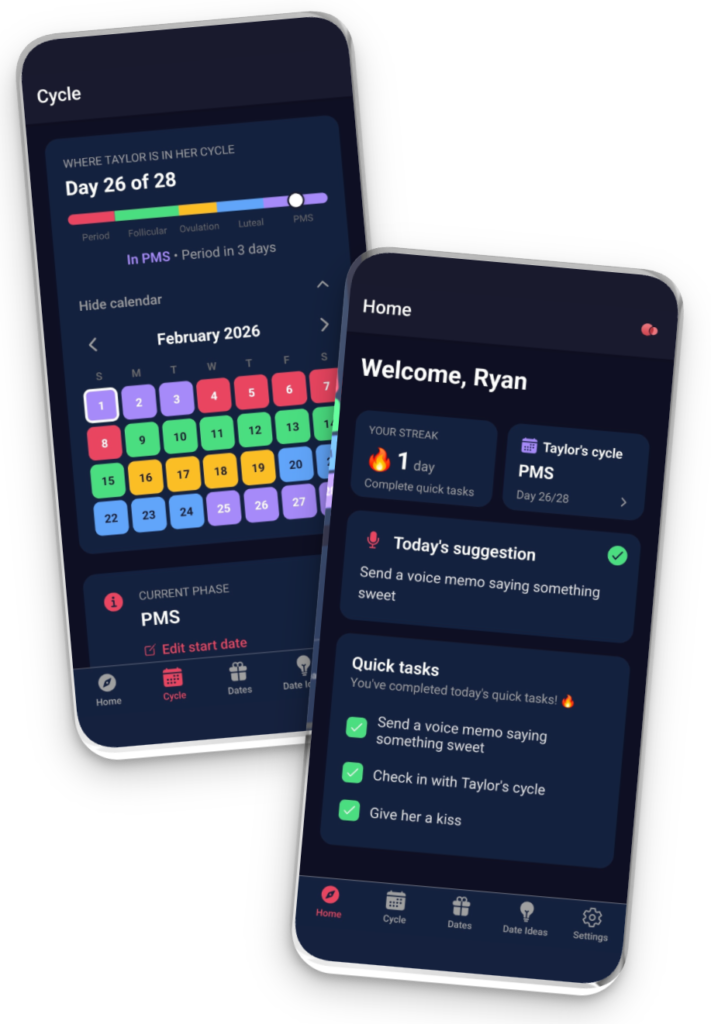
When I see she is entering her luteal phase, I know to be extra patient. If she starts picking a fight or saying we should end things, I don’t get defensive. I just stay calm, offer her a heating pad or some snacks, and wait for the hormones to level out.
You have to remember that to her, the feelings are real, even if the cause is biological. Don’t tell her “you are just saying this because of your period” because that is the fastest way to make the fight worse. Just listen, give her space if she asks for it, and try to keep the peace until her period actually starts. Most of the time, the breakup talk will vanish once the bleeding begins.
If this is happening every single month, it is worth having a conversation about it when she is in a good headspace (usually the week after her period). You can suggest she talk to a doctor about PMDD. There are treatments like specific types of birth control or even low dose antidepressants that people take just during that week to keep the serotonin from bottoming out.
It is a exhausting cycle to live through, but knowing the “why” behind it makes it much easier to handle. You stop taking the “breakup” personally and start seeing it as a symptom of a medical issue.
Frequently Asked Questions
Can hormones really make you want to break up?
Yes. The drop in estrogen and progesterone affects the chemicals in the brain that regulate mood. This can cause “luteal phase dysphoria” where a person feels a deep sense of hopelessness or rejection regarding their partner.
How can I tell if it is PMDD or just a bad relationship?
The biggest sign is the timing. If she only wants to break up right before her period but is totally happy and affectionate the rest of the month, it is almost certainly hormonal. If the problems exist all month long, it might be the relationship itself.
Should I use a period tracker for my girlfriend?
It helps a lot. Using an app like DuoSync allows you to prepare for the mood shifts so you aren’t caught off guard. It helps you stay supportive instead of getting into a “logic” battle when her brain isn’t in a logical state.
Is PMDD common in different groups?
Studies show that PMDD affects roughly 3 to 9 percent of women across all racial and ethnic groups globally. While cultural expressions of distress might vary, the underlying biological shift remains a consistent factor for those with the disorder.