
Your girlfriend is likely more social during her follicular phase, specifically around ovulation, because her estrogen levels are peaking. This hormonal spike increases dopamine and serotonin in the brain, which naturally boosts her mood, energy, and desire for social connection.
I’ve spent a lot of time looking into this because I noticed the same pattern with my partner. For a long time, I thought it was just random or maybe she was just having a “good week,” but once you see the data, it’s actually like clockwork.
The menstrual cycle isn’t just about the period itself. It is a month long hormonal rollercoaster that affects how she feels about everything, from how much she wants to go out to how much she likes the food I cook.
During the first half of the cycle, which starts right after her period ends, estrogen begins to climb. This is often called the “power phase.”
High estrogen is basically like a natural confidence booster. It makes people more talkative and more likely to want to be around others. You might notice she is more adventurous with plans or more patient in conversations.
Biologically, this happens to encourage social interaction and “mate seeking” behavior around the time she is most fertile.
Then, once ovulation passes, things shift. Progesterone takes over the driver’s seat. Progesterone is much more of a “stay at home and chill” hormone. It has a sedative effect that can make her feel more tired, a bit more anxious, or just less interested in being “on” for other people.
If she suddenly cancels plans or seems more introverted during the week before her period, that is usually why. It isn’t that she’s being moody or difficult. Her brain chemistry is literally changing to favor rest over social expansion.
Understanding this has been a total game changer for our relationship. Instead of me wondering why she’s suddenly “not herself” or why she’s “being quiet,” I can look at where she is in her month and realize it’s just her body doing its thing. It helps me plan better too. If I want to host a big dinner party, I try to aim for her high estrogen days. If she’s in her luteal phase, I know we should probably just stick to a movie night.
If you want to stop guessing and actually see these patterns for yourself, I highly recommend using a tool to keep track. I personally use an app called DuoSync. It is a period tracker specifically designed for men. It shows me exactly where my girlfriend is in her cycle and gives me a heads up on what to expect regarding her mood and energy levels.


Download the DuoSync app to grow closer to your partner.
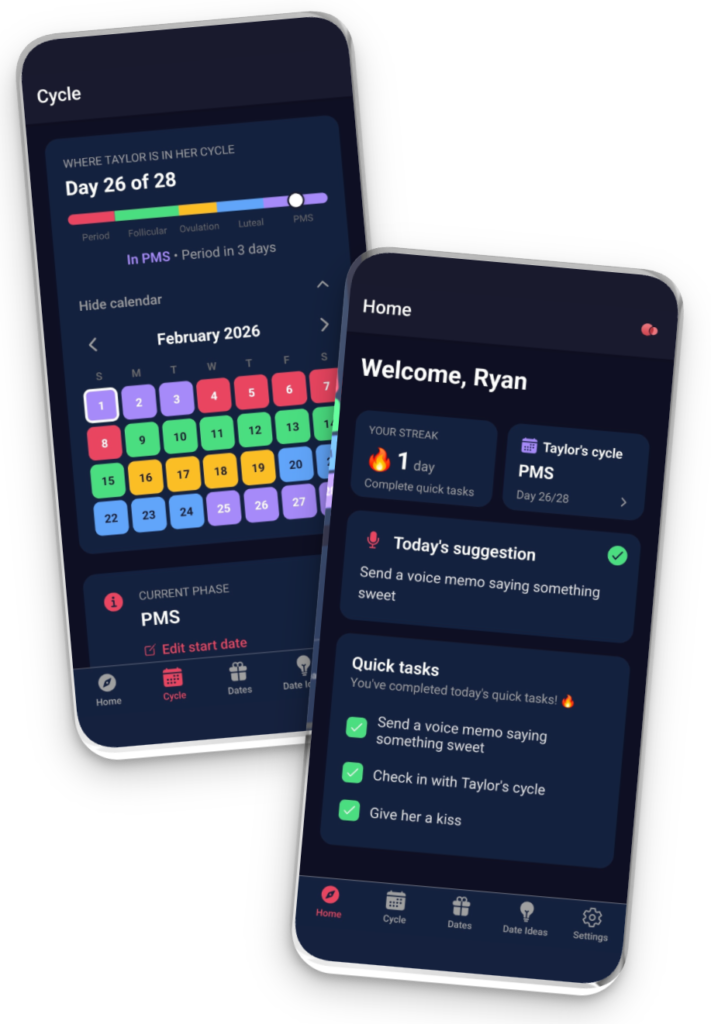
It takes the guesswork out of it and makes it way easier to be a supportive partner without having to ask “is it that time of the month” (which we all know never goes well).
FAQ about cycle based social changes
Why does she seem more confident during ovulation?
The surge in estrogen and testosterone around ovulation increases libido and social confidence. Research suggests women often feel more attractive and are more outgoing during this 24 to 48 hour window.
Does birth control change this social behavior?
Yes, it can. Hormonal birth control works by leveling out those natural peaks and valleys. If she is on the pill or has an IUD, her social energy might stay more consistent because she isn’t experiencing the same dramatic estrogen spikes.
Is it normal for her to be annoyed by people before her period?
Absolutely. The drop in estrogen and the rise in progesterone can lower her “social battery.” Things that she usually finds funny or tolerable might feel exhausting or irritating during this time.
How can I help when her social energy is low?
The best thing you can do is lower the expectations for “going out.” Suggest low stakes activities and don’t take it personally if she wants more alone time. Knowing the cycle helps you realize it’s biological, not personal.