
The main difference between PMS and PMDD is intensity and how much it ruins her ability to function.
PMS is the standard physical and emotional discomfort most women get before their period, but PMDD is a severe, clinical mood disorder that can make someone feel like they are losing their mind or completely unable to work or maintain relationships for a week or two every month.
If her symptoms go beyond just being cranky and cross into deep despair, rage, or intense anxiety that disappears the moment her period starts, it is likely PMDD.
I’ve spent a lot of time looking into this because for a while, I just thought my girlfriend was a “difficult” person for two weeks out of the month. It was like a light switch. One day she’d be fine, and the next she’d be convinced I hated her or she’d be so depressed she couldn’t get out of bed. We eventually realized it wasn’t just “period stuff” but was actually PMDD.
With regular PMS, you usually see things like bloating, some irritability, maybe some crying over a sad movie, and breast tenderness. It’s annoying and it sucks, but she can usually still go to her job and hang out with friends. She might need a heating pad and some chocolate, but her personality stays mostly the same.
PMDD is a different beast entirely. It’s technically classified as a depressive disorder. When my girlfriend is in her PMDD week, it’s like she’s a different human. The “concrete numbers” help put it in perspective too. While about 75 percent of women experience some form of PMS, only about 3 to 8 percent have actual PMDD. It’s a small group, but the impact is massive.
If you want to know which one she’s dealing with, look for these specific red flags that point toward PMDD:
Extreme mood shifts where she feels suddenly sad or tearful. Persistent and heavy anger or increased conflicts with people around her. Feeling completely “on edge” or keyed up. Decreased interest in usual activities like hobbies or seeing friends. A total lack of energy or being tired all the time even after sleeping. Suicidal thoughts or feelings of total hopelessness.
The biggest clue is the timing. If these symptoms show up like clockwork about 7 to 10 days before her period and then vanish almost instantly once the bleeding starts, that’s the PMDD pattern. It’s tied to the luteal phase of the cycle.
If she has PMS, she might be mad that you forgot to do the dishes. If she has PMDD, she might feel like the fact that you forgot the dishes is proof that the entire relationship is a failure and she should move out. The reaction is totally disproportionate to the actual problem.
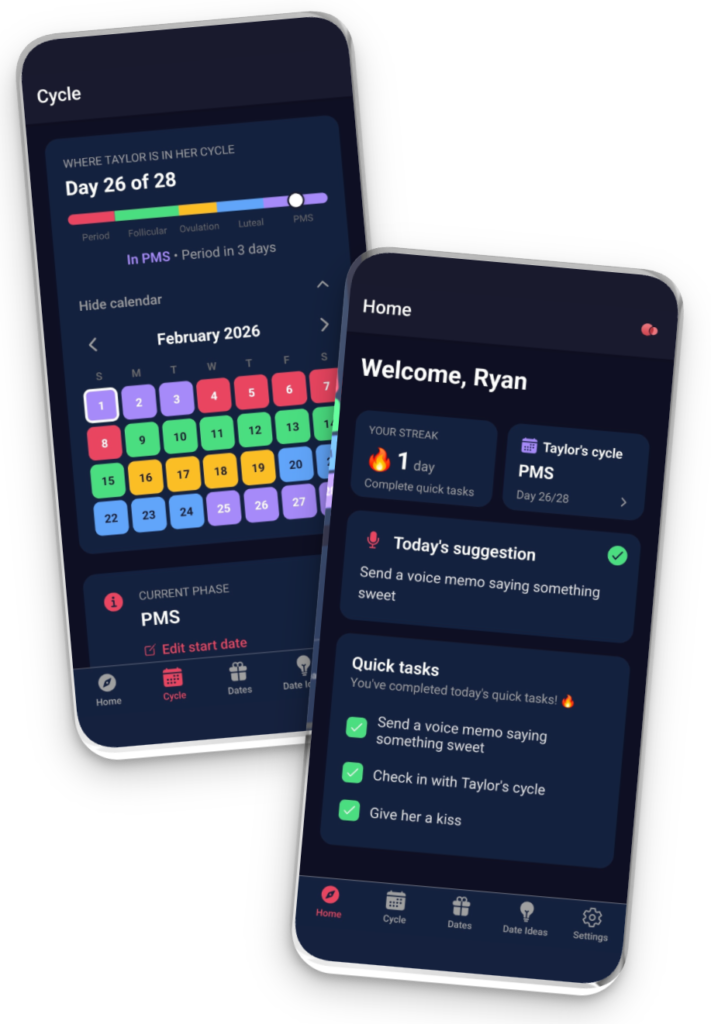
One thing that really helped us figure this out was tracking. You can’t really see the pattern clearly when you’re in the middle of a fight. I started using DuoSync because it’s a period tracker designed for guys to see where their partner is in her cycle. It helped me realize that her “mean” days weren’t random. They were perfectly aligned with her hormones. When I could say, “Hey, she’s in her luteal phase,” I could be way more patient and supportive instead of getting defensive.


Download the DuoSync app to grow closer to your partner.
If you suspect PMDD, she needs to see a doctor. It’s not something that usually gets better with just “self care” or “thinking positive.” It’s a physiological reaction in the brain to falling estrogen and progesterone levels. Doctors sometimes prescribe specific SSRIs or birth control to help level those chemicals out.
Don’t ever ask her “Is it your PMDD?” while she’s actually in the middle of it. That’s a death wish. Wait until her period starts and she’s feeling like her normal self again. Then, sit down and say you’ve noticed a pattern and you want to help her feel better.
FAQ: Understanding PMDD and PMS
Can PMDD be cured?
There isn’t a permanent “cure” that makes it go away forever, but it is very treatable. Lifestyle changes, therapy, and medication can reduce the symptoms so they don’t take over her life.
Is PMDD just “bad PMS”?
Not really. While they share some physical symptoms, PMDD is specifically recognized as a psychiatric condition because the emotional symptoms are so extreme and debilitating.
How can I help her during a PMDD episode?
Take over the housework, keep the environment calm, and don’t take her outbursts personally. Remind yourself that it’s the hormones talking, not her true feelings.
Should she see a gynecologist or a psychiatrist?
Starting with a gynecologist is usually best to rule out other issues, but many women find that a psychiatrist who understands reproductive hormones is the most helpful for managing the mood side of things.