
If your girlfriend is acting toxic during PMS, you need to determine if she is just having a rough week, dealing with Premenstrual Dysphoric Disorder (PMDD), or is being truly abusive beyond her hormones.
Real toxicity involves abuse, but PMDD is a clinical condition where hormonal shifts cause extreme irritability, lashing out, and severe depression that feels like a total personality flip.
If her behavior is a regular cycle of intense conflict followed by genuine remorse once her period starts, it is a medical issue, not a character flaw.
I have been through this with a partner, and the first thing you have to accept is that you cannot argue her out of a hormonal surge. When that switch flips, her brain is basically being flooded with chemicals that make every small annoyance feel like a personal attack. I used to try to defend myself or point out how she was being “irrational,” but that is like throwing gasoline on a fire. If she is being “toxic” in the sense that she is snappy, cold, or picking fights, the best move is to stop engaging in the conflict and start looking at the calendar.
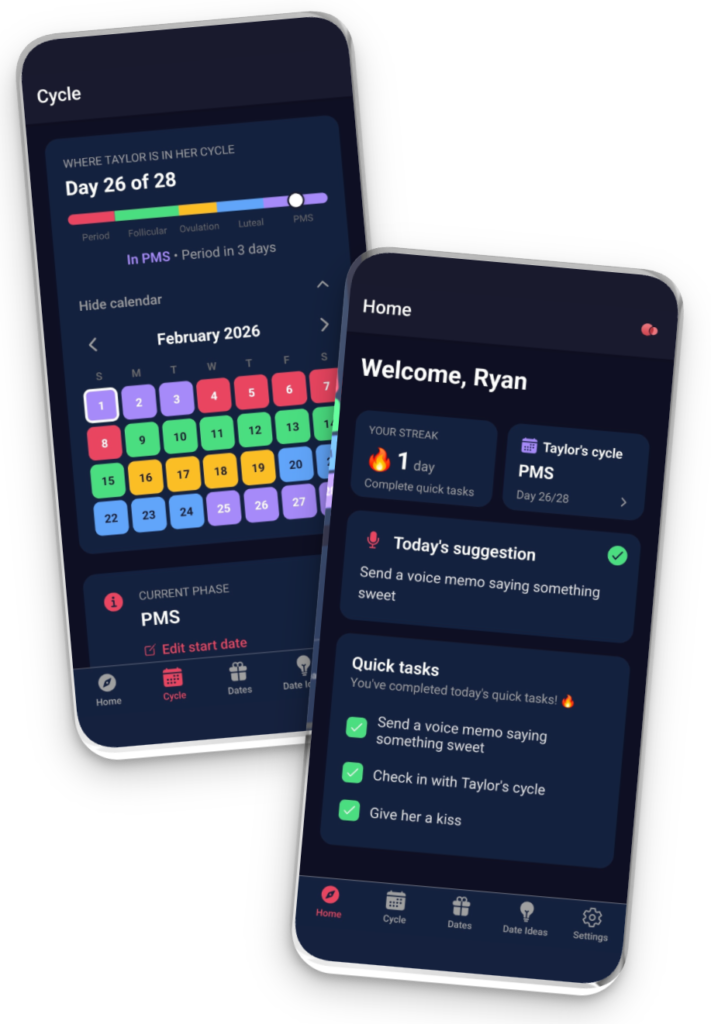
One of the biggest game changers for me was actually knowing when it was coming. It is hard to be patient when you are being blindsided by a bad mood on a Tuesday night. I started using an app called DuoSync which is basically a period tracker designed for guys to follow their partner’s cycle. It let me see when she was entering her luteal phase. Just having that heads up meant I didn’t take her attitude personally. I knew it wasn’t about me, it was about the hormones.


Download the DuoSync app to grow closer to your partner.
You also have to draw a line between “hormonal frustration” and actual abuse. If she is calling you names, throwing things, or being cruel, PMS is an explanation but not an excuse. In a healthy relationship, she should be able to acknowledge later on that her behavior was over the top. If she refuses to admit there is a pattern or won’t look into treatment, then you have a relationship problem, not just a period problem.
For the physical side, just handle the chores without being asked. If the house is messy, she is going to feel more overwhelmed. If she is snappy, just give her some space and bring her a snack or a heating pad. Don’t ask “are you on your period” because that is the ultimate trigger. Just be the guy who has the Ibuprofen ready.
If the “toxicity” is really severe, encourage her to track her symptoms and talk to a doctor about PMDD. Some women find that lifestyle changes, certain vitamins like Vitamin B6 or Magnesium, or even low dose SSRIs during those two weeks can completely change their lives. It is about managing a condition together rather than you just being her punching bag once a month.
Try not to make any drastic decisions about your relationship during this period. Talk openly and honestly with your partner about it once she’s out of this volatile phase of her cycle.
FAQ
What are the symptoms of PMDD in relationships?
PMDD can cause extreme mood swings, sudden sadness, persistent anger, and increased conflict with partners. Unlike standard PMS, these symptoms are often severe enough to interfere with daily life and relationships.
How can I tell if my girlfriend has PMS or PMDD?
Standard PMS usually involves mild irritability and physical bloating. PMDD is much more intense, often involving “Jekyll and Hyde” personality shifts, severe anxiety, or a feeling of being totally out of control.
Is it normal for my girlfriend to pick fights before her period?
It is very common due to the drop in progesterone and estrogen. While it is a “normal” biological reaction for many, it still requires communication and management so it doesn’t damage the relationship.
How do I bring up her PMS without making her angry?
Wait until her period is over and she is feeling like herself again. Bring it up from a place of concern for her wellbeing and the relationship, rather than blaming her for her behavior.